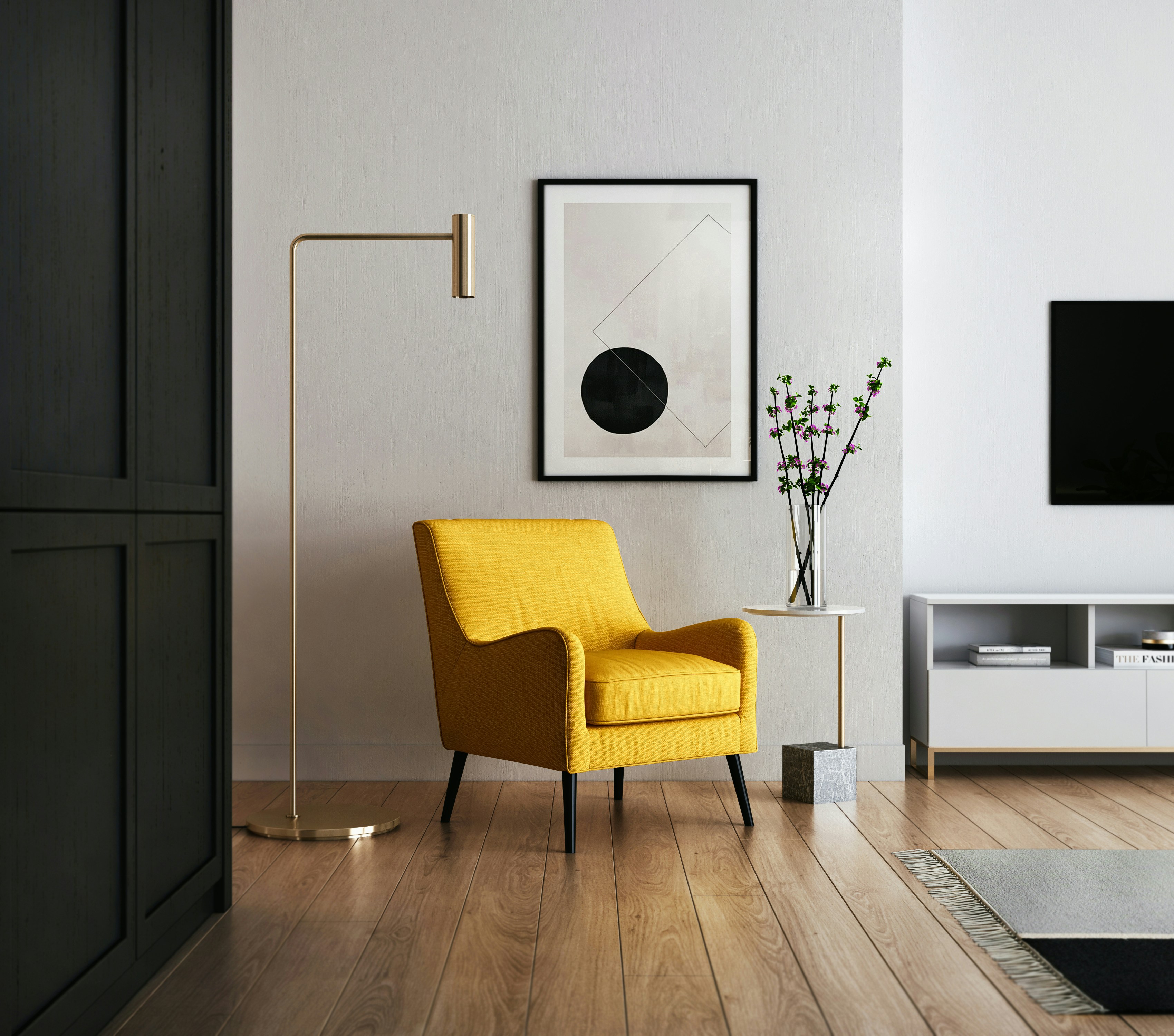
A room can be clean, furnished, and perfectly functional and still feel as though something is missing. Usually, the problem is not that you need more decoration. It is that a few visual and practical details have not been brought into balance.
Lighting may be coming from only one source. A rug may be too small for the furniture. The wall above the sofa may be empty, or every surface may be carrying one accessory too many. These are small issues, but together they can make a room feel temporary rather than finished.
The good news is that you can correct many of them without renovating the room or replacing your furniture. The eight updates below focus on the parts of a room that have the biggest effect on how complete it feels: light, scale, vertical space, texture, repetition, greenery, hardware, and editing.
1. Layer Your Lighting Instead of Relying on One Ceiling Fixture
The fastest way to make a room feel more considered is often to change the way it is lit. A single ceiling fixture has an important job, but it does not have to provide every bit of illumination. Add light at different heights so the room still works when the main overhead fixture is switched off. A floor lamp beside a chair, a table lamp on a console, or a small accent light on a shelf can create separate pools of light for reading, conversation, or relaxing.
Think in three levels:
- General light: the main ceiling or room-wide source.
- Task light: light where you perform an activity, such as reading or preparing food.
- Accent light: a smaller source that highlights architecture, artwork, shelving, or another feature.
You do not need all three in every corner. A living room, for example, might use one ceiling fixture, a floor lamp beside the sofa, and a table lamp on a side table. For evening use, bulbs in the warm-white range are often more comfortable in living and decorative areas than very cool light. If you are buying adjustable fixtures, being able to change brightness and color temperature gives you more flexibility.
The goal is not to make the room brighter at all times. It is to make the lighting useful at different times of day.
2. Fix the Rug Before Buying More Accessories
A rug can visually connect a group of furniture, but the wrong size can make even good furniture placement look disconnected. In a living room, a useful starting point is to place at least the front legs of the main seating pieces on the rug. In a larger room, putting all four legs of the sofa and chairs on the rug can create a more unified seating area. The right choice depends on the room dimensions, furniture arrangement, and rug size available.
Before ordering a rug, measure the furniture footprint rather than guessing from the empty floor. Mark the proposed rug dimensions on the floor with painter’s tape or newspaper. Then walk around the arrangement and check whether the rug leaves a sensible amount of visible flooring around the furniture.
For example, a 5x7 rug can work in a compact seating arrangement, but it may look undersized beneath a large sectional. A larger rug may cost more, but it can sometimes solve a room’s visual imbalance without changing the furniture. This is also one place where practicality matters. In a high-traffic area, choose a construction and material that suit the amount of cleaning the room requires rather than choosing only by appearance.
3. Give the Walls the Right Amount of Visual Weight
Furniture does not exist in isolation. The empty wall above it is part of the composition too. If a sofa, console, bed, or sideboard is visually heavy and the wall above it is completely empty, the room can feel unbalanced. On the other hand, covering every available section of wall can make the space feel busy.
Start by considering the width of the furniture below. A large piece of artwork or a mirror should generally have enough presence to relate to the furniture rather than appearing like a small object floating above it. A common starting point is artwork or a mirror that is roughly two-thirds to three-quarters of the width of the furniture beneath it, while leaving room for the particular frame and surrounding architecture.
Height matters too. Art that is mounted extremely high can feel disconnected from the furniture. For a typical seated living area, the center of the artwork is often more comfortable closer to eye level than near the ceiling.
When a single large piece is not appropriate, use a small gallery arrangement, shelf, mirror, or combination of objects. The important thing is to establish a relationship between the wall feature and the furniture underneath it.
4. Add Texture Before Adding More Color
A room can have a carefully chosen color palette and still feel flat when every surface has the same visual character. Texture creates contrast without requiring another strong color. Try combining smooth and tactile materials such as:
- woven baskets with painted furniture
- linen or cotton textiles with leather
- ceramic with wood
- glass with stone
- a soft throw with a structured sofa
The goal is not to collect as many textures as possible. Three or four noticeably different materials can be enough in a small arrangement. This is particularly useful in neutral rooms. Instead of adding several new accent colors because the room feels boring, first ask whether the problem is actually a lack of texture.
For example, a beige sofa, light wood table, woven basket, textured cushion, and ceramic lamp can have considerably more visual depth than five beige accessories with nearly identical surfaces.
5. Use Repetition to Make Different Pieces Feel Connected
Rooms often look more finished when certain elements repeat. That does not mean buying a matching furniture set. Instead, repeat a color, material, finish, shape, or natural element two or three times around the room.
If a living room has warm wood furniture, a wooden frame or small wood accessory can echo that tone elsewhere. If brass appears on a light fixture, a small brass detail on a side table can make the finish feel intentional. If one corner contains greenery, another smaller plant or botanical element can create continuity.
The same principle works with color. A muted blue used in a cushion can reappear in artwork or a small decorative object across the room. Repetition should be noticeable enough to create a connection but subtle enough that the room does not look like everything was purchased as a set.
6. Bring in Greenery Where the Room Needs Softness
Plants can add height, organic shapes, and a different kind of texture to a room dominated by furniture and hard surfaces. Choose the plant based on the actual conditions first: available light, temperature, watering routine, and the amount of maintenance you are willing to provide. A plant that looks beautiful in a photograph will not improve a room if it cannot survive in that location.
You also do not need a collection of plants. One medium plant in an empty corner, a small plant on a shelf, or a few stems in a vase can be enough to introduce an organic element. If natural plants are impractical because of light or maintenance, a well-made artificial arrangement can still provide the visual effect. It should be treated as a design element rather than as a substitute for a plant-care requirement.
The useful question is not “Where can I fit another plant?” It is “Where does the room need a softer shape or a little height?”

7. Update Small Hardware Where It Has the Most Impact
Hardware is easy to overlook because each individual handle or pull is small. Together, however, hardware can influence how a kitchen, bathroom, dresser, or storage unit looks. Before replacing anything, check the existing hole spacing, screw size, mounting method, and the condition of the furniture or cabinetry. New hardware needs to fit the existing installation or you may create unnecessary repair work.
You do not have to replace every handle in the house. Concentrate on a visible group that looks dated, mismatched, or worn. A simple finish can also help connect different parts of a room. For example, a black cabinet pull can relate to a black light fixture, while a warm brass pull can echo another brass detail nearby.
Hardware is most effective when it supports the room’s existing design instead of becoming an unrelated statement.
8. Edit the Room Before You Buy Anything Else
This is the update that costs nothing. Decorating often becomes a cycle of adding: another cushion, another vase, another framed print, another basket. Eventually the room contains plenty of attractive things but very little breathing space.
Before shopping, remove a few objects from the surfaces that feel busiest. Clear part of a coffee table, reduce the number of items on a console, or remove decorative pieces that no longer relate to the room. Then live with the edited arrangement for a day or two.
You may discover that the room did not need another accessory at all. It needed a clearer focal point and more visible space around the pieces that mattered. A useful test is to ask of every decorative object:
- Does it serve a practical purpose?
- Does it add useful scale, texture, color, or height?
- Does it connect to something else in the room?
- Does it have personal meaning?
If the answer is no to all four, the item may be a candidate for storage or removal.
A Simple Room-Finishing Checklist
Before buying new decor, walk through the room in this order:
1. Lighting: Do I have useful light at more than one height?
2. Furniture and rug: Does the rug relate to the furniture footprint?
3. Walls: Is the visual weight above the major furniture balanced?
4. Texture: Are there enough differences in material and surface?
5. Repetition: Do colors, finishes, shapes, or materials appear elsewhere in the room?
6. Greenery: Would an organic shape improve an empty or overly hard area?
7. Hardware: Are visible handles and fixtures consistent and in good condition?
8. Editing: Is anything present simply because there was an empty surface to fill?
This sequence is useful because it starts with the fundamentals. There is little value in buying decorative accessories when the room’s lighting, rug scale, or furniture arrangement is still working against the overall design.
Final Thoughts
Making a room feel finished is less about spending more money and more about correcting the details that affect how everything relates to everything else.
Start with lighting. Check the rug and furniture relationship. Give important walls enough visual weight. Add texture, repeat a few elements across the room, introduce greenery where it genuinely suits the conditions, and update small hardware when it will make a visible difference. Finally, remove anything that is creating clutter rather than adding value.
The result should not look perfectly matched or staged. A successful room still has personality and signs of everyday life. It simply feels as though the major decisions belong together.
And before buying another decorative item, remember the simplest finishing update of all: sometimes the room needs less, not more.
Disclaimer: Glimerz is a participant in the Amazon Services LLC Associates Program, an affiliate advertising program designed for sites to earn advertising fees by advertising and linking to Amazon.com. When you click certain product links in this post and make a qualifying purchase, we may earn a small commission at no additional cost to you. We only recommend products we believe add genuine value to our readers.
