A cutting board is one of the most frequently used tools in a kitchen, yet it is often chosen as an afterthought. The better approach is to match the board to the food you prepare, the amount of counter space you have, your cleaning routine, and the way you store it. You do not necessarily need a large collection. For many home kitchens, one substantial board for everyday preparation plus a separate easy-to-clean board for raw proteins is a more useful starting point than a drawer full of boards that are difficult to distinguish or maintain.
First decide what jobs the board must handle
Before comparing materials, list your common prep tasks. Chopping vegetables, slicing bread, trimming raw chicken, carving cooked meat, mincing herbs, and serving food can all place different demands on a board. A simple job map helps:
| Kitchen job | Useful board characteristic | Practical reason |
|---|---|---|
| Vegetables and herbs | Stable, generous work surface | More room for chopping and gathering |
| Raw meat or poultry | Easy-to-clean, nonporous surface | Simpler cleanup after raw-food prep |
| Bread | Long enough for the loaf | Keeps crumbs and slices on the board |
| Citrus or small garnish | Small, lightweight board | Quick to lift and wash |
| Serving | Attractive, easy-to-carry surface | Board can move directly to the table |
This immediately narrows the choices. A board should solve a task, not simply look impressive on the counter.
Wood: the everyday prep favorite
A quality hardwood board is a strong choice for general kitchen preparation because it is stable, comfortable to work on, and can be maintained for years with appropriate care. Maple, walnut, and cherry are common hardwood choices, although the exact performance depends on construction and manufacturer specifications.
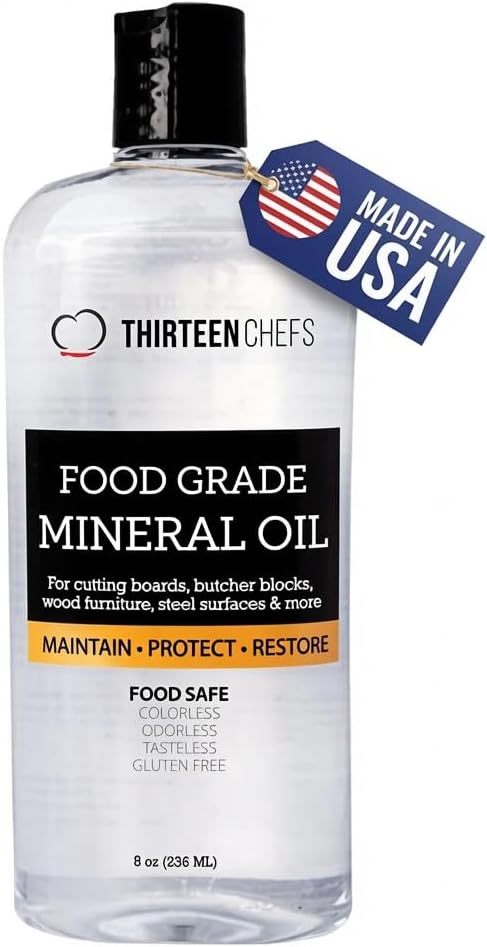
Wood is not maintenance-free. It generally needs hand washing, prompt drying, and periodic conditioning according to the manufacturer’s instructions. It should not be left soaking in a sink or treated as though it were dishwasher-safe.
There are also different constructions to consider. Edge-grain boards are made from strips arranged so the long grain forms the cutting surface. End-grain boards orient the ends of the wood fibers toward the surface and are often thicker and more expensive.
Do not buy end-grain simply because it is described as the professional option. If you have limited storage or do not want regular maintenance, a quality plastic board may be the more practical purchase.
Plastic: the easy-clean option
Plastic boards are useful when cleanup and separation of food-preparation tasks are priorities. Many are dishwasher-safe, but you should always check the individual product’s instructions rather than assuming every plastic board can go into a dishwasher. Plastic also makes it easy to use separate boards for different food categories. For example, one board can be reserved for raw meat and poultry while another handles vegetables and ready-to-eat ingredients.
The important issue is condition. Knife marks accumulate with use, and a heavily scarred board can become harder to clean thoroughly. Instead of relying on a fixed replacement period, inspect the surface regularly and replace a board when deep grooves, cracks, warping, or other damage make it difficult to clean or keep stable.
Bamboo: a different feel from hardwood
Bamboo boards are popular because they are generally affordable and have a clean, simple appearance. They can work well for everyday chopping, but bamboo is relatively hard compared with many common cutting-board woods, so the feel against a knife may differ from what you prefer. Like wood, bamboo generally needs careful washing and drying and should not be soaked. Check the manufacturer’s care instructions before using oil or placing the board in a dishwasher.
Bamboo can be a useful choice when you want a substantial board without the price of a premium hardwood model. It is still important to inspect the board for splitting, excessive wear, or warping over time.
Glass and stone: better for serving than chopping
Glass, marble, and similar hard surfaces can be attractive as serving boards or pastry surfaces, but they are generally poor choices for routine knife work. Their hardness can make cutting uncomfortable and can dull knife edges more quickly than a suitable cutting-board material. If you already own one, consider using it for cheese, serving, or dough work where appropriate rather than treating it as your primary chopping board.

Size matters more than many buyers expect
A board that is too small becomes frustrating quickly. Ingredients fall off the edges, chopped food has nowhere to collect, and the knife can feel cramped. An approximately 18 × 12-inch board is a useful starting size for many everyday prep tasks, but the right dimensions depend on your counter depth and storage. A larger board is not automatically better if it occupies most of the work surface or has nowhere safe to be stored.
Before purchasing, measure three things:
- Available counter space — where the board will actually be used.
- Storage space — cabinet, drawer, shelf, or vertical slot.
- Sink or dishwasher clearance — whether the board can be washed comfortably.
For a small kitchen, a 16 × 10-inch board may be more useful than a 20 × 15-inch board simply because it leaves enough counter space for a bowl and other ingredients.
Thickness, weight, and stability
Thickness affects how substantial a board feels and how much space it takes to store. A heavier board is often more stable during chopping, but weight also matters when you need to lift the board into the sink. Place the board on a stable, dry counter. If it moves while you chop, use a suitable non-slip mat or another manufacturer-approved method to improve stability.
Do not choose a very thick board if you will struggle to lift it safely. The best board is one that is stable enough for your work but practical for your cleaning routine.
Do you need a juice groove?
A perimeter juice groove can be useful when cutting foods that release liquid, such as juicy fruit or certain meats. It creates a channel that can catch some liquid before it reaches the counter. But it also reduces the completely flat cutting area and adds another surface to clean. If most of your prep involves dry vegetables and herbs, a flat board may be simpler.
Think about the food you actually prepare rather than treating a groove as a mandatory feature.
A two-board system covers most kitchens
For a straightforward setup, consider assigning jobs instead of buying several identical boards.
Board 1: everyday preparation. Use a stable wood or bamboo board for vegetables, herbs, bread, and other foods that fit your normal workflow.
Board 2: raw proteins. Use a separate board that is appropriate for raw meat, poultry, or seafood and can be cleaned according to the manufacturer’s instructions.
Keeping the boards visually distinct can reduce mix-ups. If you use color-coded boards, choose a simple system that everyone in the household can remember. For households that prepare large amounts of food, a third smaller board can be useful for quick tasks or serving. Add boards because they solve a real workflow problem, not simply because a set contains six sizes.
What professional kitchens teach home cooks
Commercial kitchens often use task separation because speed, cleaning, and food safety have to work together. The useful lesson for a home cook is not that you need restaurant-sized equipment. It is that each tool should have a clear job.
A home version might therefore be:
- One large, stable board for everyday produce and general prep.
- One separate board for raw proteins.
- A smaller board only if you regularly need it.
The exact material and color system can vary. What matters is that the boards are easy to identify and clean according to their intended use.
Cleaning and care by material
Care should always follow the manufacturer’s instructions, but these general habits are useful:
Wood: Wash by hand, avoid prolonged soaking, dry thoroughly, and condition with a food-safe product when the surface becomes dry according to the board manufacturer’s guidance.
Bamboo: Hand-wash and dry thoroughly unless the manufacturer specifically states otherwise. Avoid prolonged soaking.
Plastic: If dishwasher-safe, use the dishwasher when appropriate, particularly after raw-food preparation. Inspect regularly for deep grooves or damage.
Any material: Clean the board after each use and prevent raw-food juices from contacting ready-to-eat foods, clean utensils, or finished dishes.
If a board develops cracks, significant warping, loose sections, or deep damage, replacing it is usually more sensible than trying to restore a compromised cutting surface.
A worked example: choosing boards for a small kitchen
Imagine a kitchen with a 22-inch-wide prep counter and limited cabinet space. Buying a very large butcher-block board may look attractive, but it could leave too little room for ingredients and be awkward to store. A medium-sized everyday board that fits the counter comfortably can handle most vegetable and herb preparation. Add a thinner plastic board that can be stored vertically or in a narrow cabinet section for raw proteins.
If bread cutting is common, choose an everyday board long enough for the usual loaf rather than buying a third board immediately. If the board can also be carried to the table for serving, it earns another useful role.
Buying checklist
Before purchasing, check:
- Board dimensions fit the actual counter.
- Storage location has been measured.
- Board is stable during cutting.
- Material matches your cleaning routine.
- Raw-protein preparation has a separate plan.
- Manufacturer’s care instructions are clear.
- Juice groove is included only if useful for your cooking.
- Thickness and weight are comfortable to lift.
- Surface is large enough for your normal prep volume.
- Replacement is planned if serious cracks, warping, or deep damage develops.
The right cutting board is less about finding one universally “best” material and more about building a setup that fits your kitchen. Measure the counter and storage first, choose a comfortable everyday work surface, keep raw-protein preparation separate when practical, and select materials you are willing to clean and maintain. A simple two-board system can cover most home cooking without filling a cabinet with equipment you rarely use.
Affiliate Disclosure: Some product links on this page are affiliate links. If you purchase through them, Glimerz may earn a commission at no additional cost to you. Our recommendations are selected to support the practical guidance in this article.

