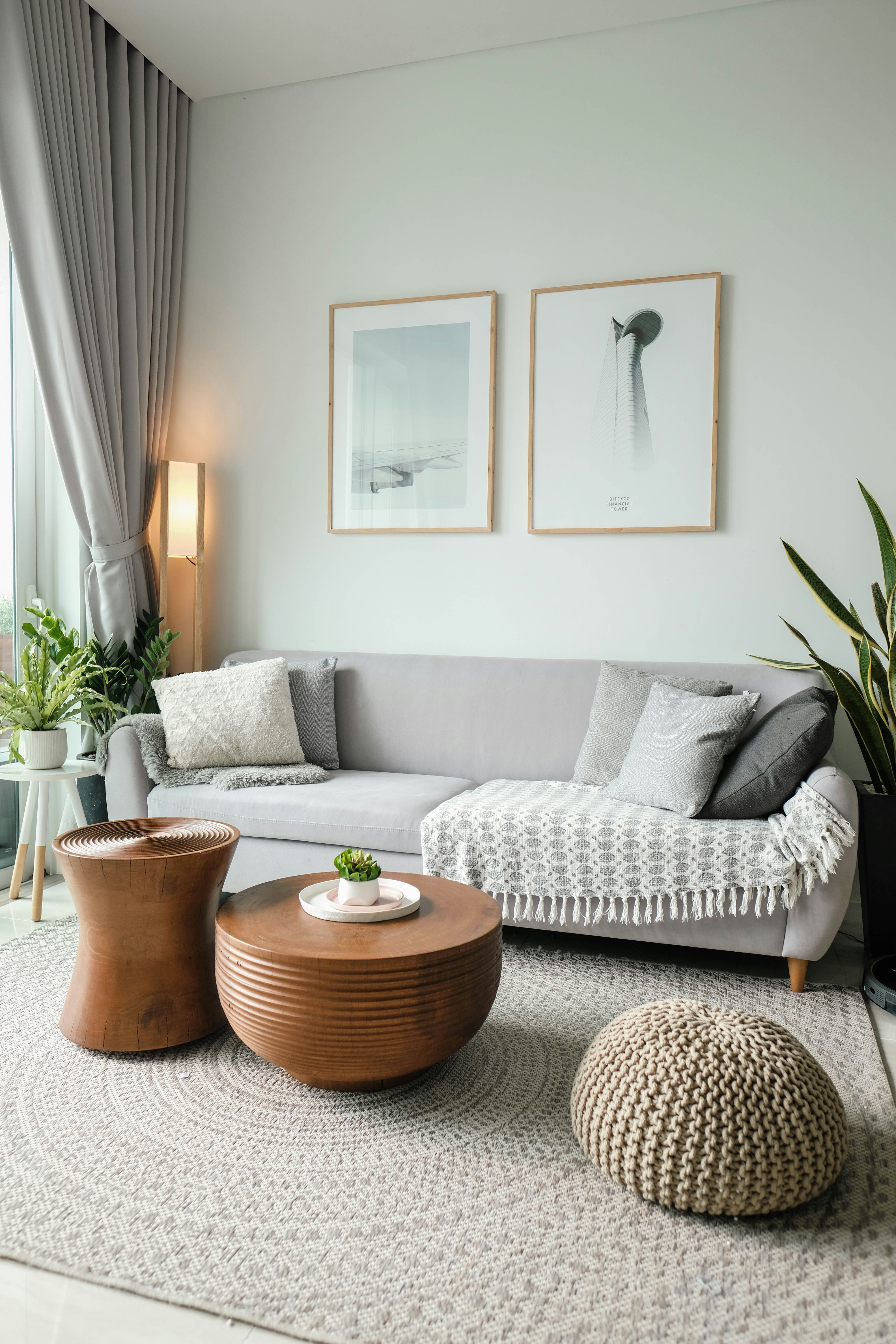
Curtains are not simply a finishing accessory. They control privacy, daylight, glare, warmth, and the visual relationship between a window and the rest of the room. That is why buying them by color alone often leads to disappointment. A panel can look beautiful online and still be the wrong length, too narrow for the window, too sheer for the room, or difficult to operate once installed.
The easiest way to get curtains right is to treat the purchase as a small measuring and planning project. Decide what the window needs to do, measure before shopping, then choose the fabric and style that support that job.
Start With the Window, Not the Curtain Color
Before looking at patterns or finishes, write down four things:
- Window width: Measure the actual area you want the curtains to cover. If several windows sit together, measure the full group as well as the individual openings.
- Available wall space: Check how much room exists above and beside the frame. This determines whether you can mount the rod higher and wider.
- Finished curtain length: Measure from the planned rod position to the floor or sill. Do not rely on the window’s listed dimensions.
- The room’s main requirement: Decide whether your priority is privacy, daylight, darkness, glare control, insulation, decoration, or a combination.
Measure twice. Curtain mistakes are unusually frustrating because a few inches can affect both appearance and usability.
How to Choose Curtain Length
For full-height curtains, the three most useful floor treatments are just touching the floor, slightly hovering above it, or intentionally pooling. A floor-skimming curtain is a good general choice because it looks neat without requiring the fabric to sit on the floor. A very small clearance can also work where cleaning is a concern. A puddled treatment uses extra fabric on purpose and is better suited to spaces where the curtains will not be constantly opened, vacuumed around, or exposed to children and pets.
Avoid choosing a length simply because it is the closest standard size. If the ready-made panel is too long, check whether it can be hemmed cleanly. If it is too short, buying a longer panel is usually easier than trying to disguise the missing length.
For kitchens and other windows where a full-length treatment is impractical, sill-length or cafe-style curtains can be appropriate. The important distinction is that a shorter curtain should look intentional rather than like a floor-length curtain was purchased in the wrong size.
Curtain Width: Calculate the Fabric You Actually Need
The old advice that “fuller always looks better” is too absolute. Fullness depends on the fabric, heading style, window size, and whether the curtains are primarily decorative or expected to close completely. A useful starting point is 1.5 to 2 times the track or rod width for the total curtain fabric. Lighter sheers can often tolerate more fullness, while a heavy fabric may need less to avoid becoming unnecessarily bulky.
For example, suppose the rod spans 72 inches. At 1.5 times fullness: 72 × 1.5 = 108 inches of total fabric width At 2 times fullness: 72 × 2 = 144 inches of total fabric width If you use two equal panels, that means approximately 54–72 inches of flat fabric width per panel. Always check the manufacturer’s stated finished width, because a panel advertised as 52 inches wide may not provide 52 inches of usable visual coverage once headings and folds are considered.
For decorative side panels that rarely close, you may need less fabric. For curtains that regularly close across the entire window, plan for enough width to create comfortable folds without stretching the fabric flat.
Where Should the Curtain Rod Go?
There is no single universal height that works for every window, but mounting the rod above the frame often creates a longer visual line and allows the panels to clear more of the glass when open. A practical starting point is several inches above the top of the window frame, provided there is enough wall space and the installation will not interfere with trim, blinds, cabinets, or the ceiling. For a tall room, you can sometimes move the rod higher to emphasize the room’s vertical proportions.
Extend the rod beyond the window when the wall allows it. This gives the opened panels somewhere to stack without covering as much glass. On a narrow wall, however, do not force an oversized rod simply to follow a decorating rule; the available clearance and furniture layout matter more.
Also check the rod’s actual load rating. Heavy lined curtains can be substantially heavier than lightweight sheers, and a decorative rod that works for one may sag with another.
Fabric Choice Should Follow the Room’s Job
Curtain fabric affects light, privacy, drape, maintenance, and visual weight. There is no single best fabric for every room.

| Room or situation | Practical starting point | Why it works | Watch for |
|---|---|---|---|
| Living room | Linen or cotton blend | Soft appearance with moderate light filtering | Wrinkling and variable opacity |
| Bedroom | Lined fabric or blackout option | Better darkness and privacy | Added weight and less daylight |
| Kitchen | Easy-care washable fabric | Easier cleaning around food and moisture | Keep fabric away from heat sources |
| Bathroom | Moisture-tolerant, washable treatment | Easier maintenance | Avoid fabrics that stay damp |
| Home office | Light-filtering or adjustable treatment | Controls glare without necessarily darkening the room | Monitor reflections and screen glare |
| Street-facing window | Sheer plus privacy layer | Flexible daytime and nighttime coverage | Sheers alone may not provide night privacy |
The table is a starting point, not a rulebook. Sun exposure, local climate, pets, children, and cleaning habits can change the best choice.
Sheers: Decide What Privacy You Need
Sheers are useful when you want daylight without leaving the window completely exposed. During the day, they can soften incoming light and reduce the visual openness of a window. Nighttime privacy is different. When the room is brighter than the outside, a sheer may provide far less privacy than expected. If privacy matters after dark, test the fabric in the actual room or combine the sheer with a heavier curtain or another suitable window treatment.
Layering also gives you more control: use the sheer for daytime light and the outer panel when you need stronger privacy or darkness.
Blackout and Room-Darkening Are Not the Same
If darkness is important, read the product specification rather than relying on the word “blackout” in a product title. Lining, side gaps, the curtain’s width, and light entering around the top and bottom all affect the final result. Bedrooms, nurseries, media rooms, and windows exposed to strong nighttime lighting are common situations where a blackout treatment can be useful. In a living room, a lighter treatment may be preferable if the goal is to preserve daylight and an open feeling.
If you already have attractive curtains, adding an appropriate lining or separate backing may be another option, depending on how the panels are constructed.
Color and Pattern: Connect the Curtains to the Room
Curtains do not have to match the wall exactly. Instead, look for a relationship with at least one existing element: the wall color, rug, upholstery, wood tone, artwork, or another repeated accent. If the room already contains a large patterned sofa or rug, a quieter curtain can provide visual breathing room. If the furniture is mostly solid and neutral, a subtle pattern can introduce interest without requiring a complete room makeover.
For small rooms, curtains close to the wall color can reduce the number of strong visual boundaries. In a larger room, contrast can be used deliberately to frame the window and create a stronger focal point. Neither approach is automatically better; choose according to the room’s existing proportions and visual balance.
Hardware: Check Function Before Finish
Choose the rod, brackets, rings, and finials as a system rather than treating hardware as an afterthought. Before buying, check:
- the rod’s adjustable range;
- bracket projection from the wall;
- maximum supported weight;
- whether the brackets can be anchored securely;
- clearance from blinds, handles, radiators, and furniture;
- whether the panels can open and close without catching.
For a wide window, a center support may be necessary. For heavier curtains, use appropriate wall anchors or attach brackets to suitable structural points according to the installation requirements. The finish can then follow the room: black, brass, nickel, bronze, or another finish can work as long as it relates to the existing hardware rather than competing with every other metal in the room.
Three Curtain Setups That Solve Different Problems
1. The Light-and-Privacy Setup
Use a sheer layer with fuller outer panels. This is useful for a living room where you want daylight during the day but stronger privacy in the evening.
2. The Bedroom Darkness Setup
Use lined or blackout-capable panels, paying attention to side and top gaps. Choose a simple fabric if the room already has several visual elements competing for attention.
3. The Small-Room Setup
Use a rod mounted high enough to create a continuous vertical line, with panels that relate closely to the wall color. Keep the fabric practical and avoid excessive pooling where floor space is limited.
A Worked Example: A 72-Inch Living-Room Window
Imagine a living-room window that is 60 inches wide and sits on a wall with enough space for a 72-inch rod. Start with the rod width: 72 inches. For approximately 1.5 times fullness, plan for about 108 inches of total fabric width. Two panels of roughly 54 inches each would meet that starting calculation, assuming their listed dimensions represent flat fabric width.
Next, measure from the intended rod position to the floor. Suppose that measurement is 96 inches. If you want the panels to hover slightly above the floor, select a finished length a little shorter than 96 inches. If the available panel is longer, plan for hemming rather than accepting an awkward excess.

Finally, check where the curtains will stack when open. If the 72-inch rod leaves enough clearance outside the glass, the panels can move away from the window instead of covering a large portion of it. This simple sequence—rod width → fullness → finished length → stacking clearance—prevents several common buying mistakes before you spend money.
Common Curtain Mistakes to Avoid
Buying before measuring. Standard sizes are convenient, but your window and rod determine the finished result.
Measuring only the glass. The curtain treatment often covers more area than the glass itself.
Ignoring panel width. Two panels can still be too narrow if the total fabric width is insufficient.
Choosing fabric from a screen alone. Color, opacity, texture, and sheen can look different in daylight and artificial light.
Forgetting the hem. If a ready-made panel is longer than needed, account for the finished hem before judging the size.
Using blackout curtains where you do not want darkness. A room that needs daylight may be better served by sheers or light-filtering fabric.
Ignoring maintenance. Check the care label before choosing a fabric for a kitchen, pet-heavy room, or high-touch space.
Choosing decorative hardware that cannot support the curtains. Appearance comes second to safe, stable installation.
Curtain Shopping Checklist
Before placing an order, save these measurements and decisions in your phone:
- Window or window-group width: ______
- Planned rod/track width: ______
- Rod-to-floor measurement: ______
- Desired finished curtain length: ______
- Number of panels: ______
- Target fullness: 1.5× / 1.75× / 2× / other
- Privacy requirement: low / moderate / high
- Daylight requirement: high / moderate / low
- Blackout requirement: yes / no
- Fabric preference: ______
- Care requirement: washable / dry clean / other
- Rod weight capacity: ______
- Bracket and wall clearance checked: yes / no
Take this list with you when comparing products. It makes the decision much less dependent on attractive product photography.
The Bottom Line
The best curtain choice is the one that fits the window, performs the job you actually need, and belongs visually in the room. Start with measurements, decide how much light and privacy you need, calculate a sensible amount of fabric, and only then choose color and style.
Curtains do not need to be expensive to look intentional. What matters most is that the length, width, hardware, fabric, and room function have been considered together. That small amount of planning is usually more valuable than buying the most luxurious-looking panel on the shelf.
Affiliate disclosure: This article contains affiliate links. If you purchase through one of these links, Glimerz may earn a commission at no additional cost to you. Product suggestions are included because they relate to the curtain-planning decisions discussed above; they do not determine our editorial recommendations.

