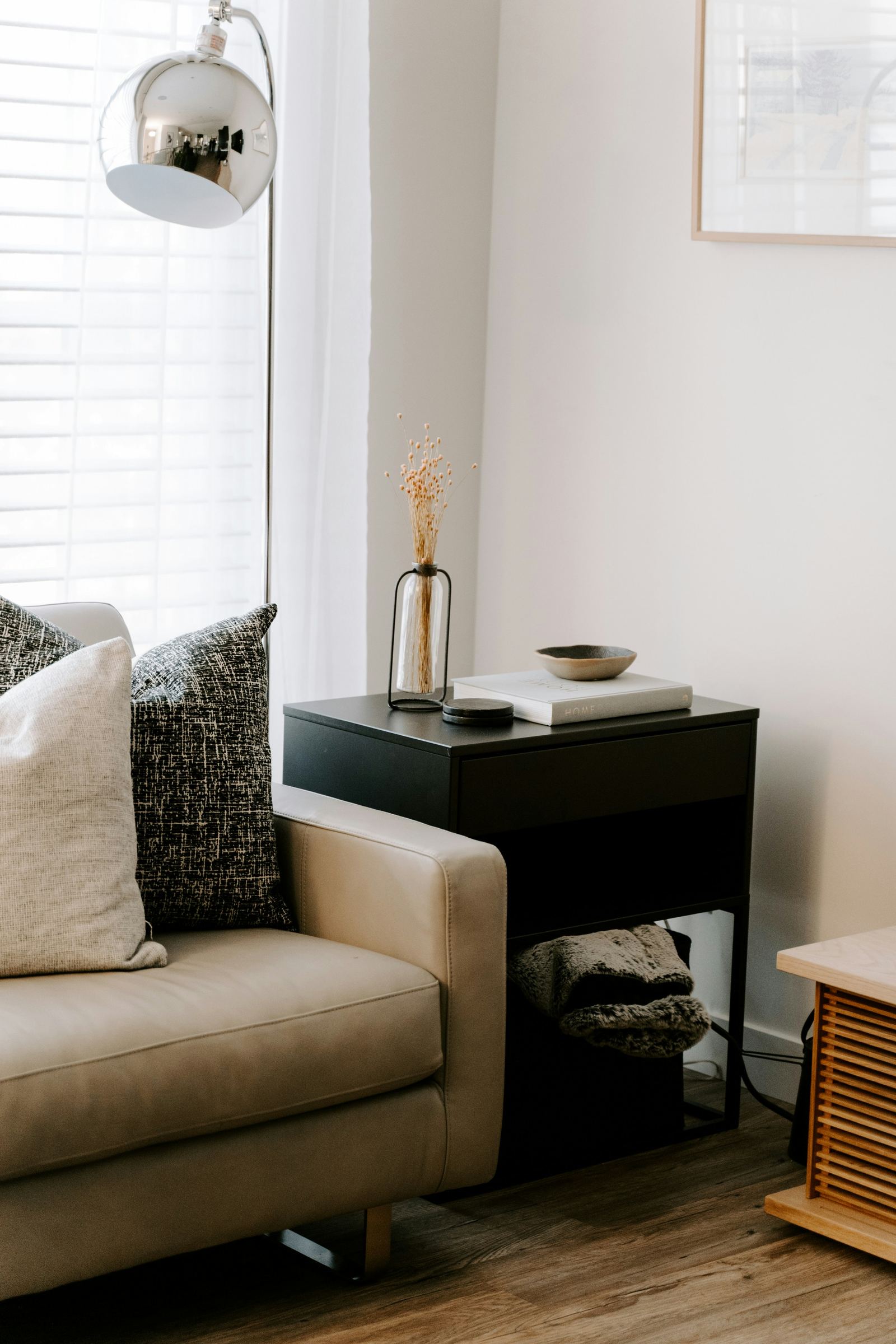
A whole-home decorating project becomes much easier when you stop treating every room as a separate shopping assignment. Instead of buying attractive pieces one by one and hoping they eventually work together, build a simple system: define the look, identify what is staying, establish a repeatable color palette, solve furniture layout and lighting, then add texture and personality.
This approach is especially useful when a home needs several rooms refreshed at the same time. It gives you a sequence for deciding what deserves money first and what can wait. The goal is not to make every room identical. The goal is to make the rooms feel related while allowing each one to serve its own purpose.
1. Define the Style in Practical Terms
You do not need to choose a perfect design label before you begin. Words such as modern, contemporary, minimalist, Scandinavian, transitional, or farmhouse can be useful shorthand, but they become more useful when translated into visible decisions. For example, instead of saying, “I want a modern home,” write down three or four characteristics you actually want:
- simple furniture profiles
- warm neutral walls
- natural wood accents
- black or dark metal details
- limited decorative clutter
Now you have something you can compare against while shopping. A good style statement should help you reject items. If a decorative piece is attractive but introduces a completely different color, ornate shape, or material that you do not plan to repeat, it may be a poor purchase even if you like it on its own.
2. Separate Fixed Elements From Flexible Decor
Before choosing colors or accessories, make a list of the things you are not planning to replace. These might include flooring, kitchen cabinets, countertops, bathroom tile, large furniture, doors, window frames, or existing light fixtures. These fixed elements are your starting point. Your new decor should work with them rather than forcing you into an expensive replacement cycle.
For example, if the floor has a strong warm wood tone, a cool gray-heavy palette may create a different result from what you expected. If your kitchen already has brushed nickel hardware, you can introduce black or brass elsewhere without immediately replacing every fixture. This simple inventory can prevent a surprising amount of unnecessary spending.
3. Build a Whole-Home Color Palette
A whole-home palette does not mean every room needs the same wall color. It means the colors have a recognizable relationship as you move through the house. Start with one dependable neutral that can appear in several spaces. Then choose one or two supporting colors and an accent color that can be repeated through smaller pieces such as cushions, artwork, rugs, or accessories.
A practical example might be:
| Role | Example | Where it can appear |
|---|---|---|
| Main neutral | Warm white or soft beige | Walls and large textiles |
| Secondary color | Muted olive | Living room, bedroom, plants or artwork |
| Dark anchor | Charcoal or matte black | Lighting, frames, hardware |
| Warm accent | Terracotta or muted brass | Small decor and accessories |
The familiar 60-30-10 approach can be used as a loose visual guide, but it is not a requirement. Real homes contain fixed finishes and irregular furniture proportions, so forcing exact percentages can make decorating harder rather than easier. Instead, repeat important colors at least a few times and make sure they relate to the existing finishes.
4. Solve Furniture Layout Before Buying Decor
A beautiful accessory cannot fix furniture that is too large, poorly positioned, or difficult to walk around. Measure each room before shopping. Record the room length and width, door swings, windows, radiators, outlets, and any permanent obstacles. Then measure the major furniture pieces you already own.
As a starting point, leave roughly 30–36 inches of clear walking space on major circulation routes when the room allows it. Smaller clearances may be unavoidable in compact rooms, but the principle is important: a room should support movement before it is filled with decoration.
Painter’s tape can also help. Mark the footprint of a proposed sofa, dining table, desk, or cabinet on the floor before buying it. This gives you a much better sense of scale than looking at a product photograph.
5. Choose Furniture for the Room, Not Just the Style
Modern decorating does not mean every piece must have a minimalist appearance. The more useful question is whether the furniture has the right scale and function for the room. For a small living room, a compact sofa with usable circulation may be better than a deep sectional that technically fits but blocks the main path. In a bedroom, the bed should leave enough room to open drawers and move around it comfortably.
Also consider what each piece needs to do. A storage ottoman can provide seating, a footrest, and concealed storage. A narrow console can provide a landing place near an entrance without consuming the depth of a full cabinet.
Buy for the problem you are solving, not simply because a product looks good in a showroom.
6. Treat Lighting as Part of the Layout
One ceiling fixture rarely needs to do every lighting job in a room. Think in layers based on activities.
Ambient lighting provides general illumination. Task lighting helps with specific activities such as reading, cooking, working, or applying makeup. Accent lighting can draw attention to artwork, shelving, or architectural details.
Before buying lamps, identify where people actually sit and work. A reading chair may need a nearby floor or table lamp. A desk needs light positioned so it does not create distracting shadows on the work surface. A console may benefit from a smaller lamp that also provides a visual anchor.

Natural light should also influence your choices. Observe the room during the day before deciding whether you need lighter window treatments, additional lamps, or a mirror positioned to redirect available light.
7. Add Texture Without Filling Every Surface
Texture creates variation between materials, but more texture is not automatically better. Start by identifying the largest surfaces: flooring, sofa, bed, curtains, rug, and major case goods. Then add a few contrasting materials. A room with smooth painted walls, a fabric sofa, and wood furniture might gain enough variation from a woven basket, textured rug, ceramic object, and soft throw.
Think in terms of contrast rather than quantity:
- smooth + woven
- soft + hard
- matte + reflective
- solid + subtly patterned
This gives the eye different surfaces to read without turning every shelf and table into a collection of unrelated objects.
8. Use Storage as Part of the Design
A stylish room can still feel uncomfortable if everyday objects have nowhere to go. Storage should therefore be planned alongside decoration rather than added after clutter appears.
Use closed storage for items that create visual noise and open storage for objects worth displaying. Baskets can group small items while keeping an open shelf visually organized. In an entryway, a small tray can contain keys and other daily essentials instead of allowing them to spread across a console.
A useful test is simple: What objects normally end up on the floor, dining table, sofa, or kitchen counter? Give those objects a specific home before buying more decorative storage.
9. Connect Rooms Through Repetition
A whole home feels coordinated when certain details appear more than once. Repetition can come from color, wood tone, metal finish, textile pattern, or even a particular shape. For example, matte black might appear in the living-room lamp, kitchen lighting, bathroom mirror frame, and a few picture frames. That does not mean every room needs black hardware. It simply creates a visual thread.
The same principle works with materials. If warm oak appears in the living room, a smaller oak-toned element in the hallway or bedroom can make the transition feel deliberate. Use repetition selectively. If every room contains exactly the same lamp, artwork style, and accessories, the home can start to feel staged rather than connected.
10. Add Plants and Natural Elements Where They Fit
Plants can introduce height, color, and organic shapes, but they should be selected for the actual conditions of the room rather than used as a universal decoration. Check available light, watering access, mature plant size, and whether the location is safe for children or pets. A low-light room may need a plant suited to those conditions or a non-living alternative.
Natural materials can provide the same visual connection without requiring plant care. Wood, rattan, jute, linen, stone, and ceramics can all add variation when used in moderation.
11. Personalize the Rooms Last
Once layout, lighting, color, and storage are working, add the things that make the home yours: family photographs, travel pieces, books, artwork, inherited objects, or handmade items. Personal objects usually look stronger when they are edited rather than scattered everywhere. Group related items and leave enough empty space around them so each group has a visual boundary.
Do not feel pressure to finish every wall immediately. Living in the space for a while often reveals which areas genuinely need something and which areas were only empty because they were unfinished.
A Worked Example: Refreshing a 1,200-Square-Foot Home
Imagine a three-bedroom home with warm medium-tone flooring, white walls, a gray sofa, stainless kitchen appliances, and existing black light fixtures. The owner wants a more modern and comfortable look without replacing the major furniture.
Step 1: Keep the fixed elements. The flooring, appliances, sofa, and major fixtures remain.
Step 2: Choose the visual language. Warm neutral + natural wood + black accents + muted green.
Step 3: Connect the rooms. Use black in selected frames and lamps, repeat natural wood through small furniture or trays, and introduce muted green through artwork, cushions, and suitable plants.
Step 4: Fix the living-room layout. Keep a clear route from the entrance toward the main hallway and position the seating around the room’s focal point rather than pushing every piece against a wall automatically.

Step 5: Layer lighting. Keep the ceiling fixture, then add a floor lamp beside the reading seat and a table lamp on the console or side table.
Step 6: Edit the accessories. Use one substantial decorative grouping on the coffee table rather than covering the entire surface.
Step 7: Repeat the system. Carry the same black, wood, and muted-green relationships into the bedroom and entryway in smaller amounts.
The important point is that the home becomes coordinated without buying a complete new furniture set.
What to Spend Money on First
If the budget is limited, prioritize improvements according to their effect on daily use and how difficult they are to change later.
Higher priority
- Furniture that is genuinely the wrong size or unsafe
- Poor or inadequate lighting
- Storage problems that create daily clutter
- Worn rugs or window treatments that affect comfort
- Hardware or fixtures that are damaged or failing
Medium priority
- Artwork
- Decorative mirrors
- Accent chairs or occasional tables
- Lamps
- Plants and planters
Lower priority
- Small decorative objects bought only to fill empty surfaces
- Trend-driven accessories that do not solve a problem
- Replacing a functional item simply because another finish is fashionable
This order keeps the project focused on the parts of the home you interact with most.
Common Whole-Home Decorating Mistakes
Buying everything at once. A full-house shopping spree makes it difficult to notice what is actually missing.
Starting with accessories. Small objects cannot compensate for poor furniture scale or inadequate lighting.
Choosing colors without checking fixed finishes. Flooring, countertops, cabinets, and upholstery influence how new colors appear.
Making every room identical. Coordination is different from repetition without variation.
Ignoring storage. Clutter can undermine an otherwise well-designed room.
Using trends as the entire design plan. A trend can be one ingredient; it should not determine every permanent purchase.
Filling every empty wall. Negative space is useful. Some walls can remain intentionally quiet.
A Practical Whole-Home Checklist
Before calling the project finished, check each room:
- Does the furniture fit the room and allow comfortable movement?
- Is there a useful light source for each major activity?
- Does the color palette relate to fixed finishes?
- Are important materials or metal finishes repeated elsewhere?
- Does everyday clutter have a designated storage location?
- Are rugs and curtains correctly scaled for the room?
- Is there enough empty space around decorative groupings?
- Do personal objects appear naturally rather than as filler?
- Can the room function comfortably without the decorative items?
If several answers are no, solve those issues before buying more accessories.
The Takeaway
A stylish home does not come from filling every room with fashionable objects. It comes from making a sequence of connected decisions: understand what you already own, define the look you want, establish a flexible palette, solve furniture scale and circulation, layer lighting, add useful texture and storage, and finish with personal details.
Work room by room, but make decisions with the whole home in mind. That approach gives you a space that feels coordinated without becoming repetitive—and it also makes it much easier to spend your decorating budget where it genuinely improves everyday life.
Affiliate disclosure: This article contains affiliate links. If you purchase through one of these links, Glimerz may earn a commission at no additional cost to you. Product suggestions are included because they relate to the decorating decisions discussed above and do not determine our editorial recommendations.

