Building a Coffee Station You’ll Actually Use: A Kitchen Corner Worth Styling
A coffee station sounds like a small, almost indulgent upgrade — until you have one. What starts as “just a corner of the counter” quickly becomes the most-used square foot in the kitchen: the first stop in the morning and the spot friends gravitate toward when they visit. The trick is building one that’s genuinely functional, not just photogenic — plenty of coffee corners look great in photos and get abandoned within a month because nobody accounted for how the household actually moves through its morning.
The difference between a station that sticks and one that quietly becomes a junk shelf almost always comes down to planning, not aesthetics. Get the layout and equipment right first, and the styling takes care of itself. Here’s how to do it properly, from the ground up.
1. Pick a Spot Near Water and Power
Before anything else, location matters more than looks. Ideally your coffee station sits near an outlet and, if possible, close to the sink for easy refills and cleanup. A corner of the counter, the top of a bar cart, or a dedicated shelf all work — what matters is that it’s a spot you’ll actually walk to every morning without friction.
Think about your actual traffic pattern before committing to a spot. If the “perfect” corner is three steps out of the way of where you naturally move in the morning, it won’t get used consistently no matter how well it’s styled. A slightly less photogenic spot that’s directly in your path will outperform a beautiful one that’s inconvenient, every time.
2. Choose Your Core Equipment
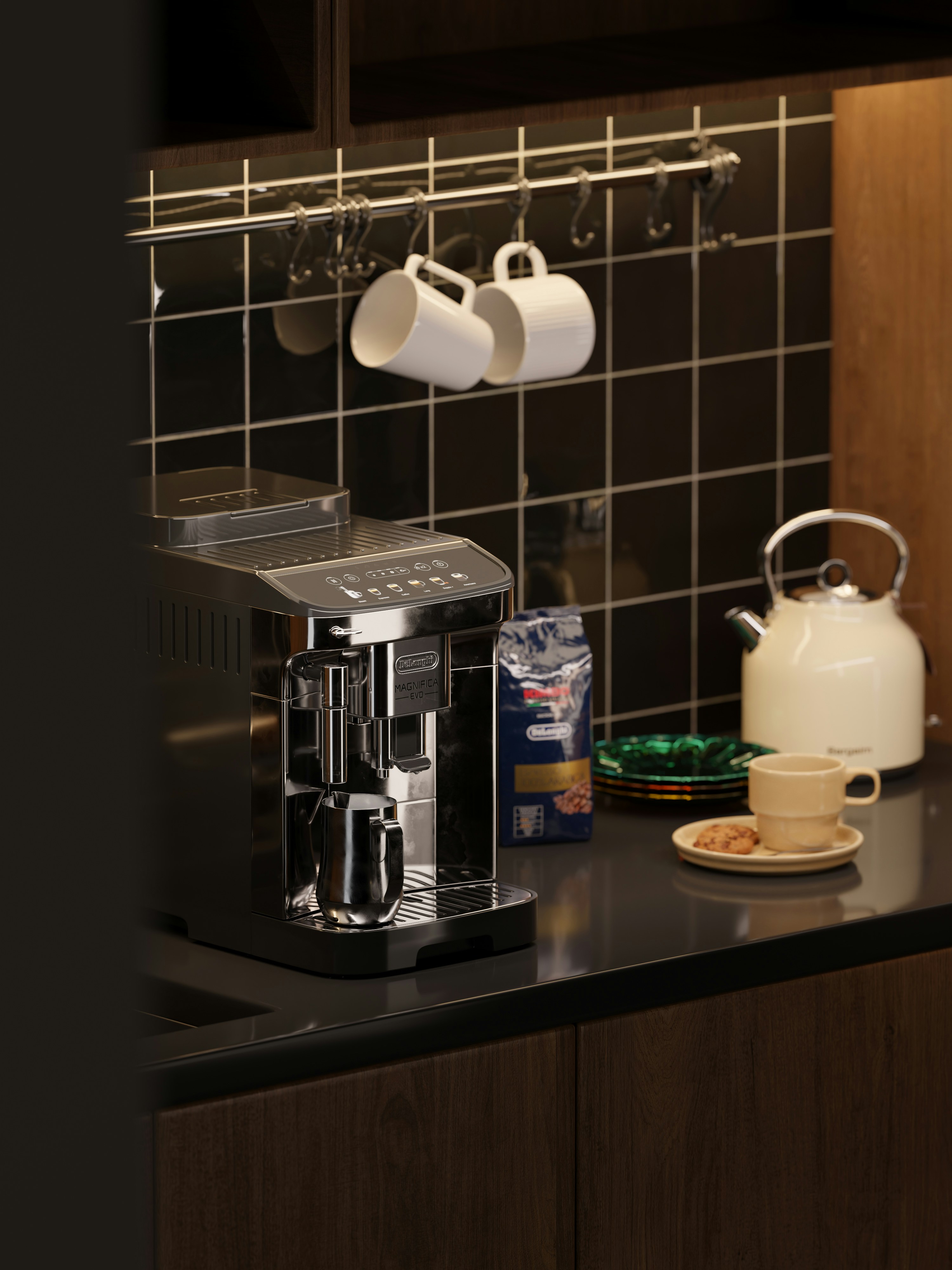
Decide upfront what your daily ritual actually requires: a drip machine, a pour-over setup, an espresso machine, or an electric kettle for pour-over and tea. Buying gear that matches your actual habits (not your aspirational ones) is what keeps a station from becoming clutter.
It helps to think in terms of daily-use versus occasional-use equipment. Whatever you reach for every single morning belongs front and center on the counter. Anything used once a week or less — a milk frother, a specialty pour-over cone, seasonal syrups — is better stored just out of sight in a nearby drawer or cabinet, ready when needed but not adding to the daily visual clutter.

3. Contain It with a Tray
A single tray under your machine and mugs does more visual work than almost anything else on this list. It corrals inevitable spills, makes wiping down the counter simple, and instantly makes a cluster of items look like an intentional setup rather than counter clutter. It also creates a clear visual boundary — everything on the tray belongs to the coffee routine, and everything off it doesn’t, which keeps the station from slowly creeping across the rest of your counter.
Choose a material that can handle daily wiping without staining — sealed wood, metal, or ceramic all hold up better than unsealed materials that absorb coffee rings over time.
4. Store Beans and Grounds Properly
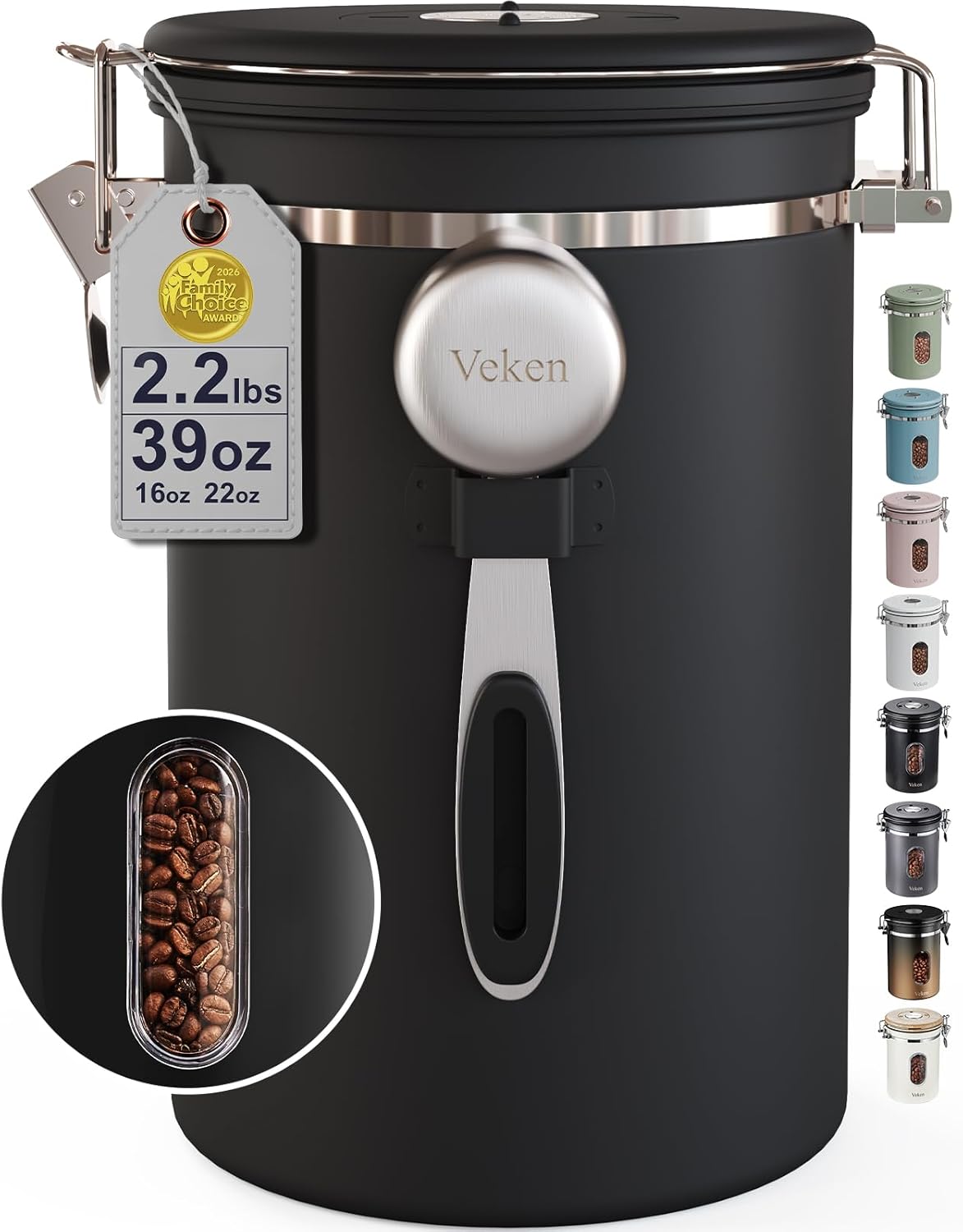
An airtight canister keeps coffee fresh far longer than the bag it came in, and looks considerably better sitting out. If you grind your own beans, keep the grinder within arm’s reach — station efficiency drops fast if you have to walk across the kitchen mid-routine.
Buy beans in quantities you’ll actually use within two to three weeks rather than stocking up in bulk. Coffee loses flavor steadily after roasting, and a beautiful canister doesn’t fix beans that have gone stale — freshness is still doing most of the work behind a genuinely good cup.
5. Curate Your Mug Situation
Open shelving or a small mug rack near the station keeps your everyday mugs accessible without digging through a cabinet. Keep it to the mugs you actually reach for — this is not the place for the full collection.
A good rule of thumb: display only as many mugs as your household uses in a typical two-day stretch, and store the rest in a cabinet. This keeps the display from ballooning into a mismatched pile and makes the station easier to keep tidy, since there’s simply less on view to fall out of order.

6. Add Vertical Storage
A small wall shelf above the station is one of the most underused upgrades. It holds syrups, filters, or extra mugs without expanding your counter footprint — especially valuable if your coffee corner is tucked into a narrow space. Going vertical rather than wide is almost always the better move in a kitchen, since counter real estate is usually the scarcest resource in the room.
If wall-mounting isn’t an option, a small tiered stand achieves a similar effect on the counter itself, giving you two levels of storage in the footprint of one.
7. Don’t Forget the Sweeteners and Extras
A small caddy or lazy Susan for sugar, sweeteners, and stirrers keeps the surface tidy and means nobody’s rifling through a drawer at 7 a.m. looking for a spoon. A rotating caddy is especially useful if your station is against a wall, since it lets everyone reach items without shuffling the whole tray around.
8. Style It Like You Mean It
Once the function is dialed in, add one or two personal touches — a small plant, a piece of art, or a simple sign. This is what separates a coffee station from just “the coffee maker’s corner.” A framed print, a small vase, or even a chalkboard with a rotating quote adds personality without competing for counter space.
9. Keep a Cleaning Routine Built In
Descaling solution, a small cloth, and a designated spot to air-dry the carafe keep the whole setup low-maintenance. A station only stays beautiful if it’s easy to keep clean — build that into the layout from day one, not as an afterthought. A quick daily wipe of the tray and a weekly descale (depending on your water hardness and machine type) prevents the slow buildup that eventually makes a station feel neglected rather than loved.
10. Build It on Any Budget
A coffee station doesn’t require a full equipment overhaul to work. Start with what you already own — your existing machine, a spare tray from another room, mugs you already have — and add pieces gradually as you understand your actual routine. The canister and the tray are usually the highest-impact, lowest-cost additions, so they’re a smart place to start if you’re building incrementally rather than all at once.
11. Adapt It for a Small Kitchen
Not every kitchen has a spare corner of counter to dedicate. In tighter spaces, a narrow bar cart tucked against a wall, a fold-down shelf, or even a single dedicated cabinet shelf can house a scaled-down version of the same setup. The principles stay the same regardless of size: contain it, keep it near power and water, and display only what you use daily.