Paint Finish Mistakes That Can Make a Room Look Worse — and What to Use Instead
Choosing paint usually starts with the fun part: the color. You compare warm whites with cool whites, debate beige versus greige, and eventually find a shade that feels right. Then comes the smaller question: “What finish should I use?”
That decision often gets much less attention than the color. It shouldn’t. The finish can change how the color looks, how much light reflects from the wall, how visible imperfections become, and how easy the surface is to clean. A color you love on a small sample can look surprisingly different once it covers an entire wall in satin or semi-gloss.
The good news is that choosing the wrong finish isn’t usually a disaster. Most paint mistakes happen because a finish is selected without considering the room, surface, lighting, and everyday use. Here are some common mistakes worth avoiding.
1. Choosing a Glossy Finish for a Wall That Isn’t Ready for It
This is one of the easiest mistakes to make. A more reflective finish can give a wall a polished appearance, but it can also draw attention to every little problem underneath.
A small drywall repair that disappears beneath matte paint can suddenly become obvious when afternoon sunlight hits a satin or semi-gloss wall. The reason is simple: reflection highlights texture.
If your wall has visible dents, uneven patches, old repairs, or inconsistent texture, take care of those problems before moving toward a higher sheen.
If you need durability but don’t want every imperfection highlighted, consider a lower-sheen washable product designed for the room.
A simple rule: the smoother the wall, the more freedom you have with sheen.
2. Assuming the Kitchen Needs Semi-Gloss Everywhere
Kitchens are busy rooms. There is cooking, steam, splashing, fingerprints, grease, and the occasional mystery mark that somehow appears on the wall.
So it’s understandable when someone thinks, “Kitchen means semi-gloss.”
But the entire kitchen doesn’t necessarily need the same finish.
Cabinet doors, trim, and surfaces that are regularly wiped may benefit from a more durable and washable finish. Walls are a different matter. Depending on the paint product and the particular area, eggshell or satin can provide a good balance between appearance and cleanability without making every wall highly reflective.
The important question isn’t simply, “What finish is best for kitchens?”
Ask instead: “Which kitchen surface am I painting, and how much use will it receive?”
That question usually leads to a better choice.
3. Using Flat Paint Because the Wall Has Imperfections
This sounds logical. If matte or flat paint hides imperfections well, why not use it whenever a wall isn’t perfect?
The problem is that hiding imperfections isn’t the only consideration.
A hallway, children’s room, family room, or busy entryway can experience considerably more touching and cleaning than a quiet bedroom. Traditional flat paint isn’t known for standing up particularly well to repeated scrubbing.
Modern washable matte paints have improved considerably, so the answer isn’t necessarily to avoid matte completely. Instead, check the specific product’s washability and durability claims.
Sometimes a washable matte gives you the softer appearance you want while offering considerably more practicality than a basic flat paint.
4. Choosing a Finish Without Thinking About Lighting
Here’s something people don’t always consider: light changes the way sheen behaves.
A wall beside a large sunny window doesn’t experience the same conditions as a darker hallway. In strong directional light, a higher sheen can create noticeable reflections. That can be beautiful when intentional, but it can also make an uneven wall look worse.
This is one reason I wouldn’t make a paint decision based only on a small store sample.
If possible, test the actual paint on the actual wall. Look at it in the morning, during the brightest part of the day, and in the evening. Turn the room lights on and off and see how the surface changes.
You may discover that the finish you loved at noon isn’t quite what you want at eight in the evening.
5. Thinking “More Washable” Automatically Means “Better”
A higher sheen is often associated with easier cleaning and greater durability. That’s useful, but it doesn’t mean you should automatically choose the shiniest finish available.
Imagine covering a calm, softly decorated bedroom with noticeably reflective paint simply because it can handle cleaning.
Technically practical? Perhaps.
Visually appropriate? Not necessarily.
Paint choices involve compromises. You’re balancing appearance, durability, cleanability, surface condition, and lighting.
The best finish is the one that gives you the balance you actually need.
6. Using One Finish Throughout the Entire House
There is nothing wrong with wanting consistency. In fact, using a small number of finishes can make a home feel more cohesive.
But consistency doesn’t mean every surface needs identical treatment.

Think about how differently these surfaces are used:
Ceiling: almost never touched.
Bedroom wall: relatively low contact.
Hallway: frequently brushed against.
Kitchen cabinet: regularly wiped.
Bathroom trim: exposed to moisture and cleaning.
Door: handled constantly.
Trying to give all of them exactly the same finish simply because the paint color is the same isn’t always practical.
A home can have a consistent color palette while using different finishes where they make sense.
7. Forgetting About Trim and Doors
Sometimes the walls get all the attention and the trim gets whatever paint happens to be left over.
That’s a missed opportunity.
A subtle difference between the wall and trim finish can add definition without introducing another color. A softer wall finish combined with a more durable, slightly more reflective finish on doors and trim can create a clean contrast.
It doesn’t have to be dramatic. In fact, subtle contrast is often more elegant than obvious contrast.
Before painting everything the same, look at the architectural details in the room. Baseboards, door frames, window trim, railings, and built-ins can all benefit from being treated as separate surfaces.
8. Picking a Finish Without Testing It on the Actual Wall
This may be the easiest mistake to prevent.
A paint card is useful. It is not your wall.
The same color can look different depending on natural light, artificial lighting, wall texture, surrounding colors, room size, and sheen.
A small test area is cheap compared with repainting an entire room.
If you’re uncertain, paint a reasonably sized sample on the wall and live with it for a little while. Don’t judge it only when you’re standing directly in front of it. Walk around the room. Look at it from the doorway. See it when sunlight moves across the wall.
Then decide.
Related Product: Interior Paint Sample/Test Pots
Small tester pots or sample paints are worth considering before buying a full container. They let you see how both the color and finish behave under your home’s actual lighting.
9. Choosing a Finish Based Only on What Looks Good in a Photograph
Interior photographs can be deceptive.
Professional photography, editing, lighting, and even your own screen can affect how a room appears. A beautiful living room photographed with soft lighting might make a particular finish look almost velvety.
That doesn’t mean the same finish will look identical in your home.
Use inspiration photographs for ideas, not as a guarantee of the final result.
Ask yourself:
How much sunlight does the room receive?
How often is the wall touched?
Are the walls smooth?
Do you need to clean them regularly?
Do you want the wall to quietly recede or become part of the visual design?
Those questions will usually lead you toward a better decision than simply copying a photograph.
10. Buying the Paint Before Buying the Right Preparation Tools
Paint gets most of the attention, but preparation often determines how good the finished surface looks.

A good brush is particularly useful around trim, corners, doors, and other areas where a roller can’t give you a clean finish. A quality angled brush can make cutting in much easier than trying to force a large brush into a tight corner.
Related Product: Angled Paint Brush
A quality angled brush is useful for trim, edges, door frames, window frames, and detailed work where precision matters.
11. Skipping Painter’s Tape When You Need It
Experienced painters can create remarkably clean lines without tape. That doesn’t mean everyone needs to paint that way.
If you’re doing a weekend room makeover and don’t have years of practice cutting straight lines, painter’s tape can make the job considerably less stressful.
The important thing is to apply it carefully and remove it according to the manufacturer’s instructions. Tape isn’t a guarantee of a perfect edge, but it can make clean transitions much easier for a DIY painter.
Related Product: Quality Painter’s Tape
Painter’s tape can be particularly useful when creating a clean transition between wall and trim or when working with two different colors.
12. Forgetting That Preparation Affects the Finish You Choose
This may be the biggest lesson of all.
People sometimes ask, “Which paint finish hides imperfections best?”
A better question is: “Can I fix the imperfections before I paint?”
If the wall has nail holes, rough patches, peeling paint, or uneven repairs, preparation can dramatically improve the final result.
Fill. Sand. Clean. Prime where appropriate. Then choose your finish.
A beautiful paint color with a poorly prepared wall can still look disappointing. A carefully prepared wall can make a relatively simple color look remarkably polished.
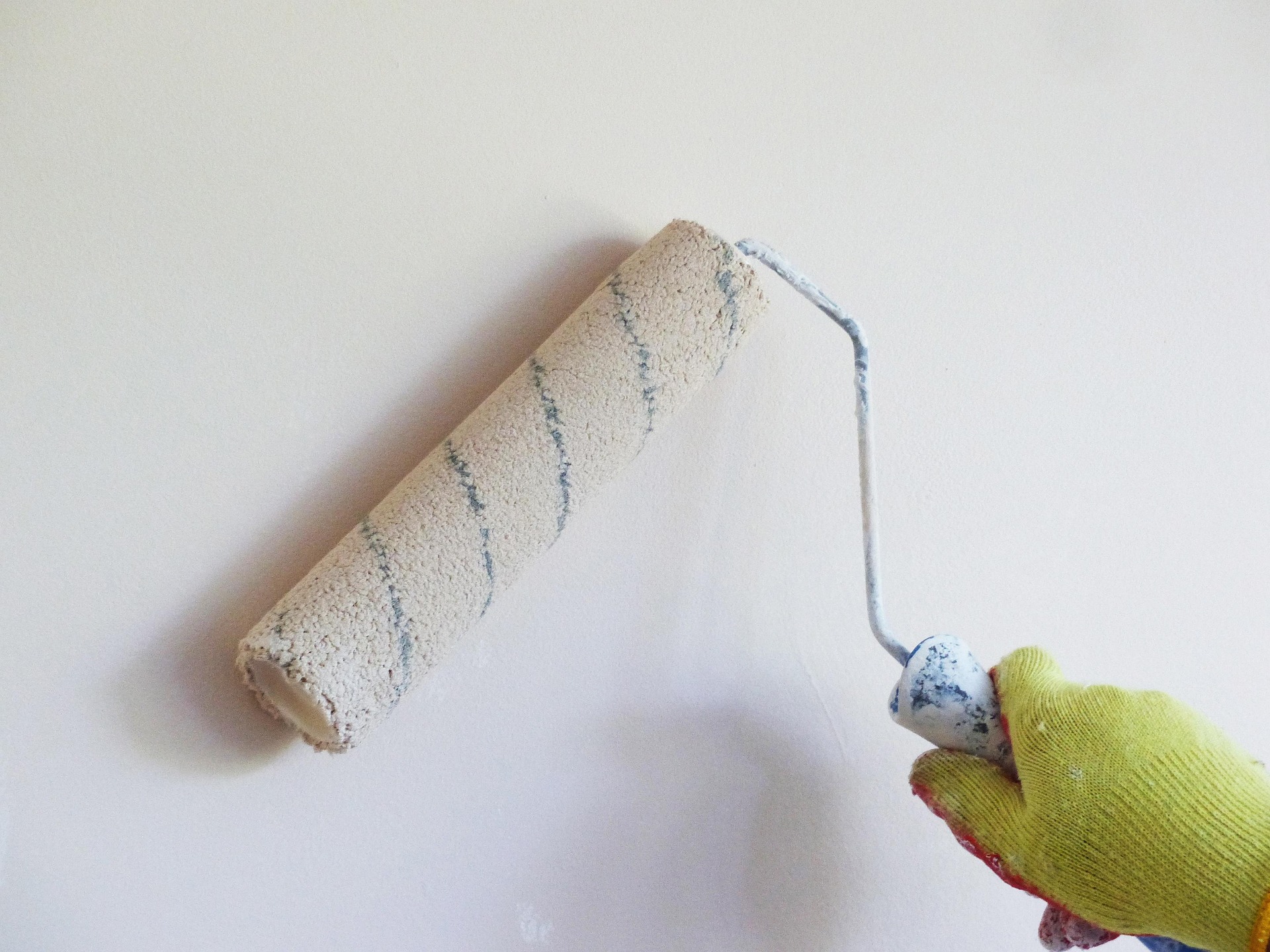
Related Product: Small Paint Roller
A small roller can be useful for applying larger test patches so you can judge the actual color and sheen more realistically before committing to a full room.
Which Paint Finish Should You Actually Choose?
There isn’t one finish that’s perfect for every room. As a starting point, consider these options:
These aren’t rigid rules. Paint manufacturers formulate products differently, and the ideal choice depends on the particular surface and how the room is used.
That’s why the product label and manufacturer’s recommendations still matter.
A Better Way to Choose Paint Finish
Instead of standing in the paint aisle trying to remember which sheen goes with which room, ask yourself five simple questions.
1. How much traffic does this surface receive?
Low traffic gives you more freedom to prioritize appearance. High traffic increases the value of durability and cleanability.
2. How smooth is the surface?
If imperfections are visible, a lower sheen is usually more forgiving.
3. How much cleaning will it receive?
A frequently touched or cleaned surface needs a finish and product designed to tolerate that use.
4. How much light hits it?
Strong directional light can make surface texture and sheen more noticeable.
5. What look are you trying to create?
Do you want the wall to quietly recede? Or do you want the surface to have a noticeable polished quality?
That final question is just as important as the practical ones.
The Bottom Line
The “wrong” paint finish isn’t always wrong because the finish itself is bad. It’s usually wrong because it was chosen without considering the room, the surface, the lighting, or the way the space is actually used.
A glossy finish isn’t automatically better than matte. Matte isn’t automatically more sophisticated. Satin isn’t automatically the answer for every kitchen. And eggshell isn’t automatically the safest choice everywhere.
Think about the wall first. Think about how you live in the room. Then choose the finish.
And if you’re still comparing matte, eggshell, satin, and semi-gloss, read our complete guide to choosing the right paint finish for a closer look at what each finish does and where it works best.

