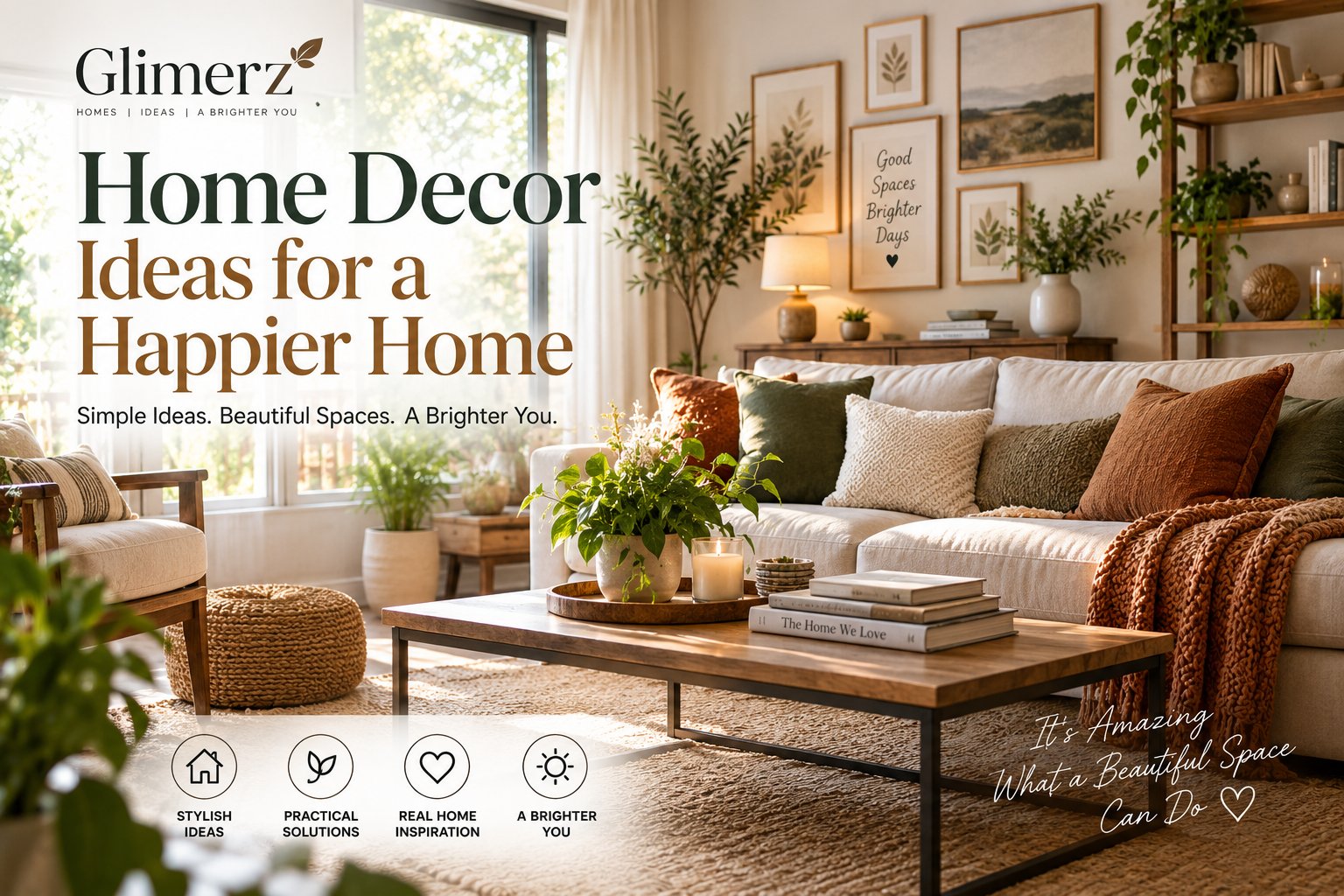
There is a certain feeling you get when you walk into a beautifully decorated home. It may not be filled with expensive furniture or designer accessories, and there may not be anything particularly extravagant about it. Yet somehow, everything seems to work together—the lighting feels comfortable, the furniture looks balanced, the colors feel connected, and the room has just enough personality without becoming crowded.
The interesting thing is that this feeling does not necessarily come from spending a lot of money. Some of the most attractive homes are created by making thoughtful choices with ordinary things. The right lamp, a textured cushion, a plant in an empty corner, or a well-placed piece of artwork can sometimes change a room more than an expensive piece of furniture.
If your home feels a little plain, unfinished, or simply ready for a refresh, you do not necessarily need to start over. With a few practical home decor changes, you can make your rooms feel warmer, more comfortable, and more thoughtfully designed without turning the process into an expensive renovation.
Start With What You Already Have
Before buying anything new, take a fresh look at the things already in your home. We often become so familiar with our surroundings that we stop noticing what works and what does not. A piece of furniture that looked perfect when you bought it may now feel out of place, while something sitting in storage might actually be exactly what the room needs.
Walk through each room and decide what you genuinely like. Perhaps your sofa is comfortable but the cushions have become tired, or your coffee table works perfectly but the area around it feels empty. You may even have a beautiful vase, photograph, lamp, or decorative object tucked away in a cupboard because you never found the right place for it.
Sometimes a room does not need more decoration; it needs better editing. Try removing a few unnecessary objects from shelves and tables and leave some open space around the pieces you want to keep. Giving your favorite items room to breathe can instantly make the room feel calmer and more sophisticated.
Stop Trying to Make Everything Match
A home can feel more interesting when everything does not look as though it came from the same furniture collection. Perfectly matching colors, materials, and accessories may look neat, but too much coordination can also make a room feel predictable. The most comfortable interiors usually have a mixture of textures, shapes, and shades that complement one another rather than matching exactly.
For example, a neutral sofa can look beautiful with cushions in cream, olive, beige, or warm brown instead of cushions that are all exactly the same color. A wooden table can be paired with a ceramic vase, a woven basket, and a soft fabric runner. These small differences give the room character and make it feel as though it has developed naturally over time.
Think about creating a color family rather than choosing one exact color. Warm beige, cream, tan, muted green, terracotta, and soft brown can work beautifully together without making the room feel overly coordinated. The result is usually more relaxed and more personal.
Let Lighting Change the Mood
Lighting is one of the easiest ways to change the atmosphere of a room, yet it is often treated as an afterthought. A room can have beautiful furniture and carefully selected decorations, but harsh lighting can make the entire space feel uncomfortable. Good lighting, on the other hand, adds warmth and gives even simple furniture a more attractive appearance.
Try using several smaller sources of light rather than relying completely on one bright ceiling fixture. A table lamp beside a sofa can create a comfortable reading area, while a small lamp on a console can bring attention to an otherwise forgotten corner. In the evening, these smaller pools of light can make the home feel much more relaxed.
Warm-toned lighting is particularly useful in living rooms and bedrooms where you want a cozy atmosphere. You do not need to replace every light in the house at once. Start with the room where you spend the most time and see how a simple lighting change affects the space.
Give One Piece the Attention
Every room benefits from having something that naturally catches the eye. It could be a large mirror, a piece of artwork, an interesting light fixture, a beautiful coffee table, or a large indoor plant. Without a focal point, a room can sometimes feel like a collection of unrelated objects.

This does not mean you need to buy something expensive. A large framed photograph, an interesting second-hand mirror, or even a collection of personal photographs arranged thoughtfully can become the main feature of a room. The important thing is to give that feature enough surrounding space so that it can actually be noticed.
If you have a large empty wall, for example, resist the temptation to immediately cover it with lots of small decorations. One substantial piece can often create a stronger and cleaner impression than several unrelated items.
Add Texture to Make Rooms Feel Comfortable
Many modern homes contain a lot of hard surfaces. Wood floors, glass, metal, stone, tile, and smooth painted walls can all look beautiful, but when too many of them are combined, a room can start to feel cold. Texture helps bring back the sense of comfort that makes a home feel lived in.
A soft throw over the arm of a sofa, a textured cushion, a woven basket, or a rug under the coffee table can make a noticeable difference. Curtains can also soften a room, particularly around large windows where hard glass surfaces dominate the space.
You do not have to buy everything at once. Start with one area, perhaps the living room sofa, and introduce two or three different textures. You may find that the room already feels considerably warmer without changing the furniture at all.
Bring a Little Nature Indoors
Plants have a way of making a room feel alive. They add color and texture naturally, and they work with almost every decorating style, from modern and minimalist to traditional and rustic.
You do not need to fill every shelf with small plants. In many cases, one larger plant in an empty corner can have more impact than several tiny plants scattered throughout the room. A simple leafy plant beside a window or next to a chair can also help soften an otherwise plain area.
If maintaining live plants is difficult, fresh branches, dried stems, or seasonal flowers can provide a similar decorative effect. The idea is simply to introduce something natural into the room rather than relying entirely on manufactured decoration.
Make Better Use of Empty Corners
Corners are easy to ignore because they are not usually the first areas we think about when decorating. However, an empty corner can sometimes become one of the most useful and attractive parts of a room when given a clear purpose.
A comfortable chair and small lamp can turn a corner beside a window into a reading space. A tall plant can fill an awkward empty area without making it feel crowded, while a narrow console can give a hallway or entrance some structure.
Instead of asking yourself, “What should I put here?” ask what the space could be used for. That small change in thinking can help you create a home that is not only more attractive but also more practical.
Pay Attention to Scale
One of the secrets behind rooms that look professionally decorated is good proportion. A tiny picture on a huge wall can look lost, while a small lamp beside a large sofa can appear unbalanced. Similarly, a very small rug underneath a large seating arrangement can make the furniture feel disconnected.
Before purchasing a new piece, consider the size of the area where it will go. Measuring the space takes only a few minutes and can prevent you from buying something that looks completely different once it arrives.

You do not always need larger furniture or bigger decorations. You simply need pieces that are appropriately sized for the room. Balance is often more important than price.
Make Shelves Look Collected Rather Than Crowded
Open shelving can be beautiful, but it can also become one of the easiest places to accumulate clutter. Books, candles, containers, photographs, small ornaments, and random household items can gradually fill every available space.
A simple reset can make a huge difference. Remove everything from the shelf and start again with only the pieces you actually want to display. Mix books with decorative objects, vary the heights, and leave some empty space between groups.
You do not need to fill every shelf completely. Empty space is part of the design, and it allows the objects you choose to stand out instead of competing with one another.
Choose Decor That Has Meaning
A beautiful home should still feel like someone’s home. Personal objects often bring more character to an interior than generic decorations purchased simply because they are currently fashionable.
A photograph from a memorable trip, a handmade bowl, an old family item, a favorite book, or a piece of artwork bought during a special occasion can tell a story. These objects may not fit perfectly into a particular decorating trend, but that is often what makes them interesting.
Try mixing these personal pieces with newer furniture and accessories. The result is usually more natural than trying to create a home where every item looks as though it came from the same catalog.
Do Not Ignore the Entryway
Your entryway is the first part of your home that you and your guests see, but it is often treated simply as a place to walk through. A few thoughtful changes can make it feel much more welcoming.
A mirror, narrow console, small lamp, basket, or piece of artwork can give the entrance a clear purpose. At the same time, remember that this is a practical area, so there should be somewhere for everyday items such as keys, bags, or shoes.
The best entryway is not necessarily the one with the most decoration. It is the one that looks welcoming while still working for everyday life.
Make Your Home Feel Like You
The most beautiful homes are rarely perfect. They have books that are actually read, cushions that get moved around, plants that sometimes need attention, photographs that bring back memories, and furniture that is chosen for comfort as much as appearance.
That is what gives a home its character.You do not need to create a showroom. You need to create a place where you feel comfortable coming home at the end of the day. Start small. Improve the lighting in one room, rearrange a shelf, add some greenery, introduce a little texture, or finally display something meaningful that has been sitting in storage. These small changes can gradually transform the way your home feels without requiring a fortune.
Because good home decor is not really about making your home look expensive. It is about making your home feel right.

